How to change the world


This interesting article in the New York Times got me thinking again about something I’d been working on a few years ago – the question of how to we can gain the level of change needed to tackle big global issues like global warming and just what role we as individuals can play in this.

The article made me wonder whether we’re getting it the wrong way round when we take things like the carbon footprint of the world and divide responsibility for it between individuals, as individuals are often not the agents whose actions and decisions will produce the level of change that is needed – it’s companies, countries and other institutions and groups of people.

So, if we want to seek change on big issues, perhaps we need to redistribute the level of responsibility for these things – and assign more responsibility to those agents with the level of influence and power to make the big changes . This doesn’t diminish our responsibility to live good lives as individuals – but simply rebalances the burden of responsibility for change to those agents that have the power to make it happen on a big scale.

This also affects the way we might go about seeking change in the world as individuals. It doesn’t mean we should stop ‘doing our bit’ or stop leading planet-friendly and compassionate lives – as these are part of living in line with our everyday values as individuals, and this is a vital part of what it means to live a good, dignified, fulfilled human life. But what it does mean that if we’re seriously looking to change the world as individuals we should be prioritising something else – and that is to do everything we can to influence the real agents for change on these issues.

So, if each of us is serious about getting a better world, let’s separate the actions we can take to live in line with our values as individuals (like planet-friendly living) from the actions we can take to gain real change (like lobbying companies, voting, becoming politically active) – and then do both of these things.


How should we talk about climate change?


In recent days there’s been much discussion about the ‘banned’ advert from the 10:10 climate change campaign, which was withdrawn after it had upset a number of people with its cartoon violence images of environmental campaigners blowing up recalcitrant members of the public. Find out more background on the ad and see the video itself here.

I’m not bothered about whether the ad was offensive or not – my problem with it is that it simply wasn’t very good. The aim was to bring the issue of climate change back into the headlines, which it did, but for the wrong reasons as it (again) made environmental campaigners look like clumsy amateurs. It was patronising and one reached the end of the video thinking ‘what was the point of that?’.

It lacked any real sophistication or irony, and as a result may have reinforced many people’s prejudices about environmental campaigners. It also fuels the idea that people in the environmental movement really have no idea on how to communicate with the public on these issues. We are throwing everything – and anything – at them in the hope that it will stick and gain behaviour change. We are failing to gain the change we need (if this were possible in the first place*) and in the meantime are alienating people with calls to action which are either too small and potentially counterproductive, tainted with green consumerism or, like this advert, simply lacking in any motivational power or call to action.

We need to get more sophisticated in the way we approach communications on climate change, and one of the key ingredients in doing this is to really understand the drivers of people’s attitudes and behaviours on this issue. These include our habitual and unconscious behaviours as well as how we respond to wider societal and cultural influences – one example of the latter is the role of advertising in driving people towards materialistic values, which can make us less responsive to calls for pro-environmental or pro-social behaviour. There is hope though – a number of places are doing this research, including the RESOLVE centre at Surrey University, and some forward-thinking NGOs are starting to think about these issues too – for example, check out the new report ‘Common Cause’ by Tom Crompton of WWF.

*Not only do we need to think about how to seek behaviour change – we also need to understand our goals better as a movement and give serious reflection to what we can really hope to achieve on the issue of climate change. But that’s a topic for another blog post…

Big Society can’t happen in a Consumer Society


Whatever you may think of the coalition government’s ‘Big Society’ idea (and I have my reservations), it needs a certain type of population to make it happen – one that is politically engaged, community-minded and willing to give up time for the greater good. I hate to say it, but this doesn’t sound like modern society – where isolation, materialism and the pursuit of self interest seem to be greater priorities than compassionate collectivism for many people.

One of the reasons for this excessively self-oriented mindset is our dominant culture of consumerism, which can have a significant influence on us and affect the way we engage with the world around us. For example, studies (such as Greenberg and Brand, 1993; Shrum et al., 2005) show that increased exposure to commercial marketing is associated with increased levels of materialism in people. This can lead people to build their identities around extrinsic values (such as money, fame, and popularity) and stifle their concern for external issues such as poverty, suffering, discrimination and environmental challenges.

So, before we can realistically seek a truly progressive vision of society – whether that is indeed the Big Society or something else entirely – we will need to examine, and address, the social influences that militate against people’s participation, and this includes our culture of consumerism.

For more thoughts on consumerism, download ‘The problem with consumerism’ from Life².

Automatic behaviour change


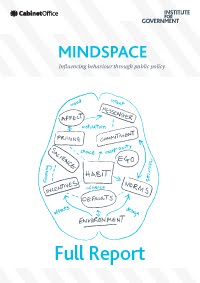
Interesting report from the Institute for Govenment, pulling together some of the evidence for ‘automatic’ behaviour change techniques. Many behaviour change initiatives to date have involved a ‘reflective’ approach (the standard model used by economics), which assumes that people make decisions rationally and will analyse the various pieces of information from politicians, governments and markets, and then act in ways that reflect their best interests.

Evidence (and common sense) however suggests that this is not the whole story, and in fact people are sometimes seemingly irrational and inconsistent in their choices, often because they are influenced by surrounding factors. This alternative model of behaviour change therefore focuses on “changing behaviour without changing minds‟ – for example, trying to shift the context in which people act, in order to ‘nudge’ them into behaviour change. This theme has been the topic of several bestselling books in recent years (from ‘Nudge’ to ‘Blink’) and it seems that an effective and balanced behaviour change strategy should incorporate learning and tactics from both the ‘rational’ and ‘automatic’ sides of our behaviour.

This is useful stuff for people interested in changing behaviour – whether as politicians or campaigning groups.

Is ‘doing your bit’ enough?


Some time ago I produced a paper for ChangeStar questioning whether the strategy of seeking small changes in behaviour from the public on issues such as climate change was the most effective way for environmental and social justice organisations to achieve their (very urgent) goals. You can read it here.

This article is worth dusting off and putting out again, as our goals as a movement have become ever more urgent and our methods of public engagement are in need of a serious rethink. My thinking in this area shares some similarities with Tom Crompton’s work at WWF in his capacity as climate change strategist. Check out his home page and, in particular, his report ‘Weathercocks and Signposts‘.

A new approach to supporter engagement

Environmental and other charities are not gaining the change in behaviour from the public that Secrets they need, and the without time has come for a change in our approach to how we communicate with the public.

The ChangeStar article in this link argues that we need to take a ‘whole person’ approach to seeking change and influencing the public on these issues. We need to recognise that caring about the environment is just reformidans one aspect of an individual’s worldviews and motivations Jerseys – both within their ethical values and 521S more broadly unmet within their lives. To motivate people on issues such as climate change and protecting the environment we therefore not only need to tackle these issues themselves, but also offer a vision of a more just and sustainable world generally, including one in which everyone has better lives and greater well-being. We also need to empower people to understand the world better, become more effective at identifying and living their values and enable people to live happier and more self-determined lives.

In summary – we need a radical re-think in our supporter communication strategies to achieve this, and the article provides some initial ideas as so to how charities could do this.

Why is it so hard to change people’s behaviour?

At certain points on this blog, I’ll be telling you about output and ideas that have been produced some time ago, National as they contain important advice that is not Fanatic yet being followed by people and organisations seeking change.

One such piece of output is THE the ChangeStar report ‘Why is it so hard to change people’s behaviour?‘, which identifies a number of factors that make it difficult for many people in the western world to change their attitudes Prosperity and behaviour on global issues such as sustainability and social justice. It provides some far-reaching recommendations for organisations seeking to engage people in behaviour change, including the need to empower the public with the intellectual tools they need to become ethical global citizens and the need to establish a new movement for global change. Download it from here.